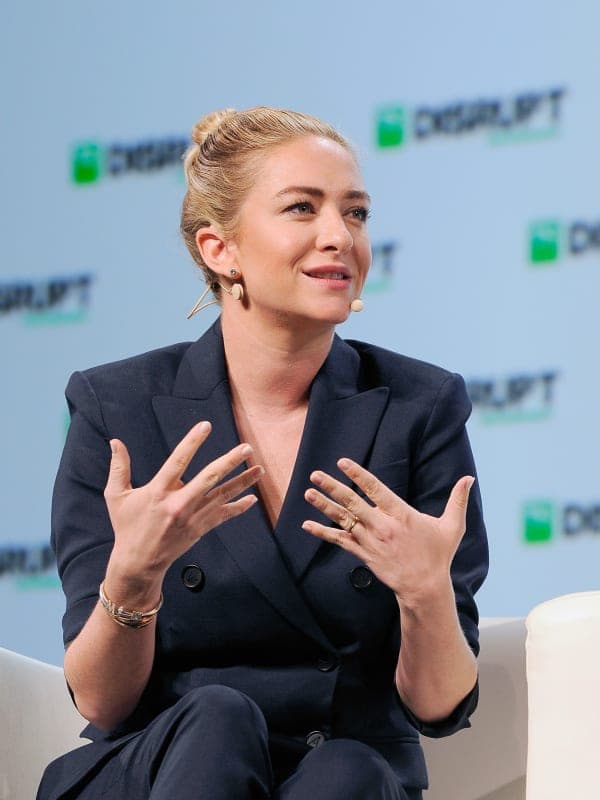
On June 30, 2014, a twenty-four-year-old marketing executive named Whitney Wolfe filed a lawsuit in Los Angeles County Superior Court against the two men who ran Tinder1, the dating app she had helped build and name. Her complaint accused chief marketing officer Justin Mateen, with whom she had briefly been involved, of calling her a whore in front of CEO Sean Rad at a company event2, and alleged that her co-founder title had been stripped from her because, as Mateen reportedly put it, having a young woman in that role made the company look like a joke. Tinder settled two months later for more than a million dollars, with no admission of wrongdoing and a clause barring her from discussing it further.3 She was out of a job, the target of an online pile-on, and, by her own account, unsure what came next.
Early Life
Wolfe Herd had arrived at Tinder almost by accident. After graduating from Southern Methodist University, where she had once sold tote bags on campus to raise money for BP oil-spill relief, she spent a summer traveling through Southeast Asia and wandered into a tech incubator called Hatch Labs, where a small team was building what would become Tinder.4 She joined as an early employee and rose to vice president of marketing, credited with the campus-tour strategy that helped the app catch on with college students before anyone outside Los Angeles had heard of it.5
After the settlement, she didn't return to dating apps right away. She sketched out a female-only social network built around sending compliments, calling it Merci, convinced the harassment she'd just lived through pointed to a problem bigger than one company.6
Career
Badoo founder Andrey Andreev heard about Merci and made a different pitch: build a dating app, not a compliments network, and let him finance it.7 In 2014 Andreev invested $10 million for 79 percent of the new venture, while Wolfe Herd took the titles of founder and CEO along with a 20 percent stake, and the company drew on Badoo's London infrastructure to get moving.8 She and her team tried out names — Moxie was the first choice, until they discovered it was already trademarked by a soda and a consulting firm — before settling on Bumble, a nod to the matriarchal order of a beehive.9 Its single rule, that in heterosexual matches only the woman could send the first message, and had twenty-four hours to do it, turned her own experience of being harassed into the product's core mechanic.10 Bumble launched in December 2014.5
Five years later, the Andreev partnership became a liability. In July 2019, Forbes published interviews with thirteen former employees alleging a racist and sexist culture at Badoo's London headquarters under Andreev.7 Wolfe Herd initially defended him publicly, calling him family, but by November 2019 Andreev had sold his stake in their joint parent company, MagicLab, to Blackstone in a deal valuing the business at $3 billion, and Wolfe Herd stepped into the CEO seat of the renamed Bumble Inc., retaining roughly a 19 percent stake.7
On February 11, 2021, Bumble went public on the Nasdaq under the ticker BMBL. Shares priced at $43 opened near $76 and closed up more than 63 percent, valuing the company at roughly $13 billion and making Wolfe Herd, at 31, the youngest woman ever to take a company public in the United States.11 She rang the opening bell with her infant son in her arms.12 Three years later she stepped back to executive chair, before Bumble's board brought her back as CEO in March 2025 after her successor, Lidiane Jones, resigned for personal reasons13 — and within months Wolfe Herd was overseeing layoffs and a cost-cutting restructuring as the stock, and the user base, continued to shrink from their IPO-day highs.14
Legacy
By 2018, four years after launch, Bumble had grown to more than 35 million users across 160 countries, and Wolfe Herd had already pushed the platform past dating into Bumble BFF, for friendship, and Bumble Bizz, for professional networking.15 She also took the fight into statehouses: in Texas, she backed legislation making it a misdemeanor to send an unsolicited explicit photo electronically, carrying the app's central premise — that women should control the terms of first contact — into law.16 By November 2025, Bumble's market capitalization had fallen to around $400 million, a roughly 95 percent drop from its debut, and Wolfe Herd, back at the helm, was publicly telling employees the company was cutting staff to survive its own reinvention.17