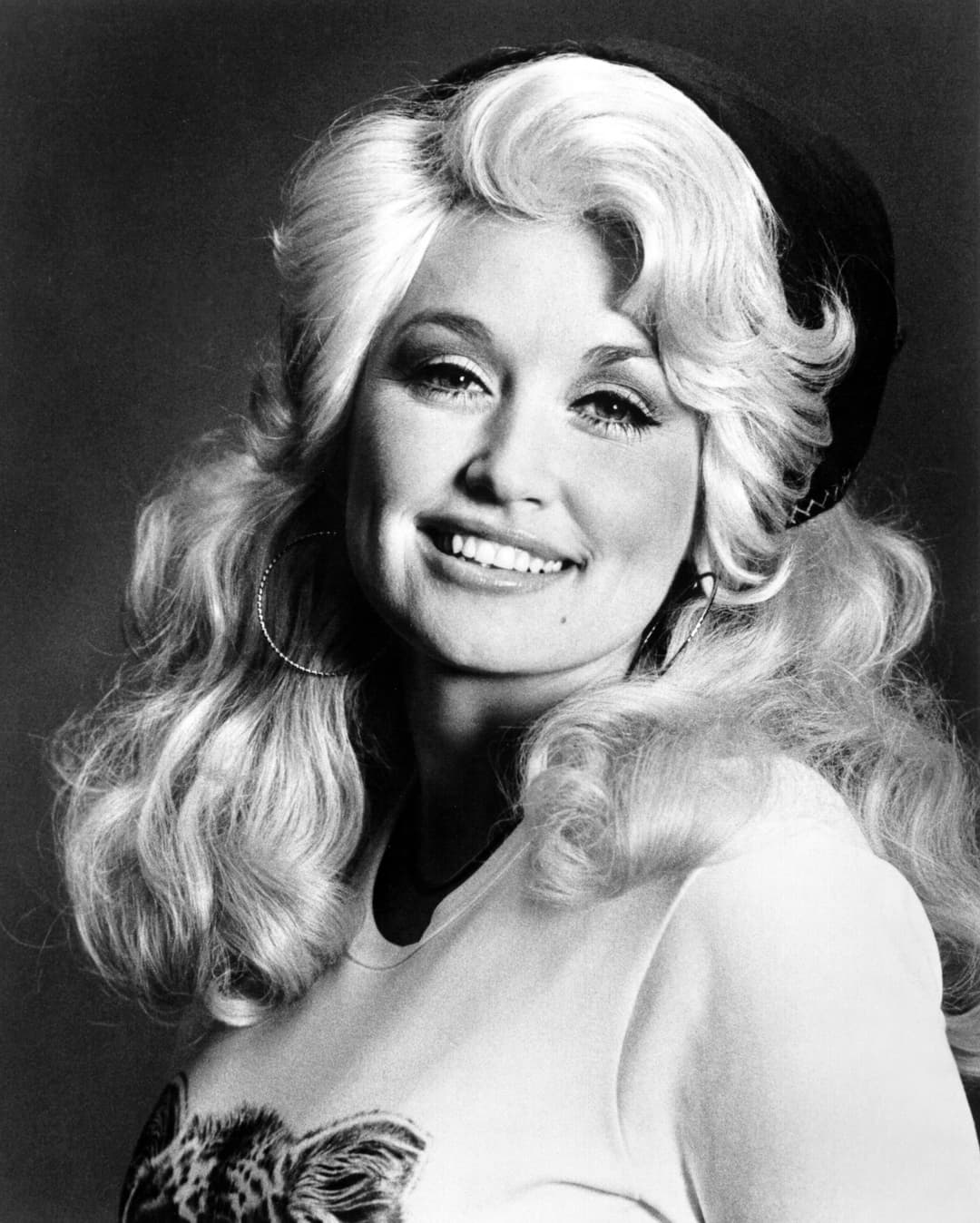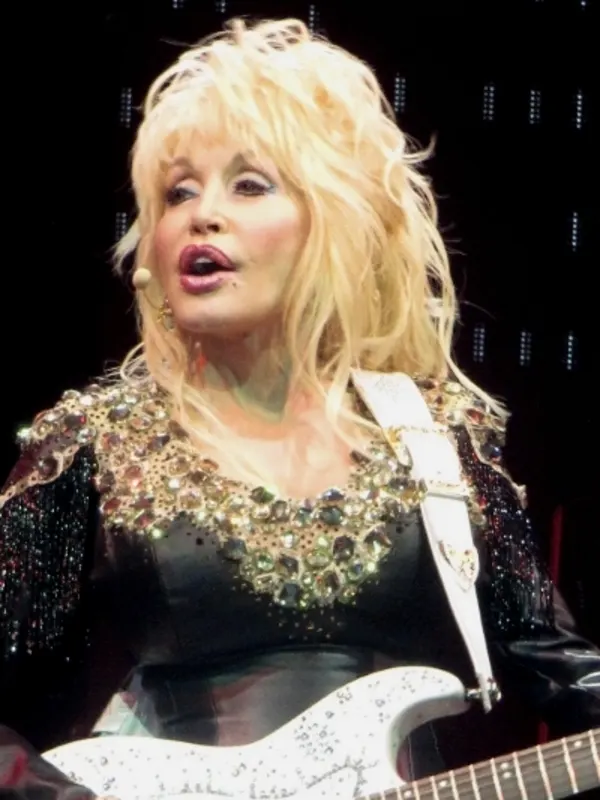
The night before Elvis Presley was scheduled to record "I Will Always Love You," his manager Colonel Tom Parker called Dolly Parton with a condition: Presley did not record anything without at least half the publishing rights. Parton had already said yes to the session, but she turned Parker down. "This is the most important copyright in my whole publishing company,1" she told him, "and I can't do that." She later recalled: "I wanted to hear Elvis sing it, and it broke my heart — I cried all night.2"
Early Life
Parton was born on January 19, 1946, in Pittman Center, Tennessee, the fourth of twelve children. By ten she was performing on regional radio and television in East Tennessee. The person most responsible for those early years was her uncle Bill Owens, her mother's brother, who drove her to her first professional engagement and co-wrote her first recorded single, "Puppy Love," when she was around eleven. At thirteen, she had already made her Grand Ole Opry debut.
Career
The day after graduating high school in 1964, Parton moved to Nashville and signed with Combine Publishing as a songwriter.5 In 1967, she and Owens co-founded a publishing company — officially named Owepar, a portmanteau of their surnames9 — securing copyright control over her catalog going forward. That same year, Parton joined Porter Wagoner's weekly television program and road show as his featured singer and duet partner. She stayed seven years. By 1970 she had her first number-one country single, "Joshua."10
When she announced she was ending the Wagoner partnership in early 1974, she played him "I Will Always Love You" as a farewell. He wept. "That's the prettiest song I ever heard," he told her. "And you can go, providing I get to produce that record." She agreed. The song went to number one. Five years later, Wagoner sued her for breach of contract, seeking $3 million; the case settled out of court in 1980, with Parton paying approximately $1 million.12
In 1992, Whitney Houston recorded the song for The Bodyguard. It spent fourteen weeks at number one on the Billboard Hot 100 and earned Parton $10 million in royalties in the '90s alone.3 She used that windfall to purchase a strip mall site in what was then a predominantly Black neighborhood off 16th Avenue in Nashville — the area now known as 12 South — and converted it into a complex she called "the house that Whitney built.4" Nashville historian David Ewing credited the investment with having "put the area on the map"; 12 South became one of the city's fastest-growing districts.4 Meanwhile, in 1986, she had already opened Dollywood in Pigeon Forge, Tennessee, co-developed with Herschend Family Entertainment on the site of a struggling Smoky Mountains attraction.13 Dollywood draws more than four million visitors annually, employs approximately 4,000 people as the largest employer in the community14, and generates approximately $1.8 billion annually for the regional economy according to Tennessee state officials.15 In 1995, she launched Dolly Parton's Imagination Library in Sevier County — mailing one free, age-appropriate book each month to children from birth through age five.16 Her father, Robert Lee Parton, could not read. In April 2020, she donated $1 million to Vanderbilt University Medical Center, funding what the lead researcher described as the critical early stages of research connected to Moderna's COVID-19 vaccine.17
Legacy
Parton sold more than 100 million records and placed 25 songs at number one on the Billboard country chart — a record for a female artist as of her death, with Reba McEntire second at 24.18 She collected 11 Grammy Awards, including a Lifetime Achievement Award19, and was inducted into the Country Music Hall of Fame in 1999 and the Rock and Roll Hall of Fame in 2022, the latter after initially asking to withdraw, saying she did not feel she had "earned that right."20 Two of her songs — "Jolene" and "I Will Always Love You" — have been inducted into the Grammy Hall of Fame.19 In June 2025, Forbes estimated her net worth at $450 million, making her one of the wealthiest self-made women in America.21 She died on August 25, 2026, in Nashville. By then, the Imagination Library had gifted more than 332 million books to children across five countries16.