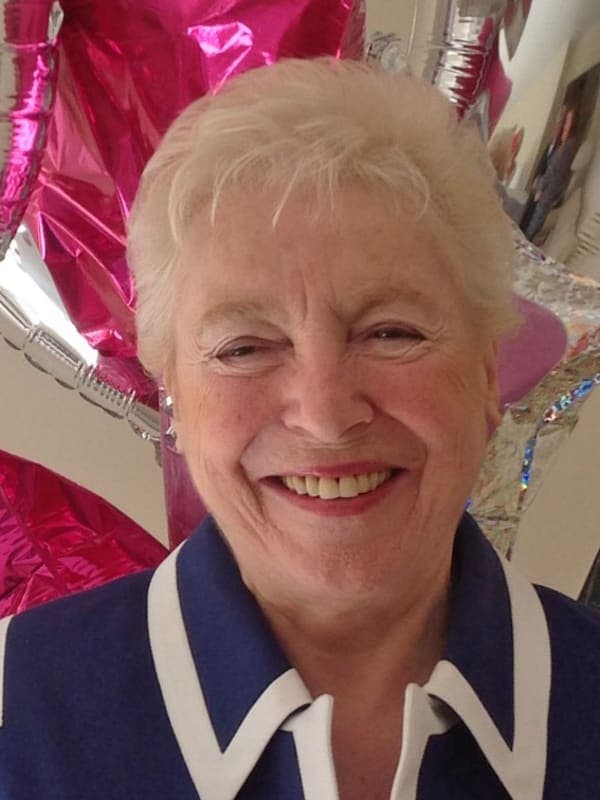
In 1962, Stephanie Shirley started a software company from her dining-room table with £62. She was thirty years old, a former child refugee who had arrived in England on the Kindertransport in 1939, and she had just spent a decade writing machine code. The company was called Freelance Programmers. Of its first 300 staff, 297 were women.1
Early Life
At the Post Office Research Station at Dollis Hill, Shirley was the lone woman among roughly 2,000 male employees. She worked on ERNIE — the Electronic Random Number Indicator Equipment used to draw Premium Bond numbers — as the only woman on the team. The maths degree she'd spent six years earning in evening classes meant little in practice: promotions went to men, training went to men. By 1959 she had moved to CDL Ltd, where as chief programmer she was responsible for checking software on the ICT 1301. By 1962, having reached chief programmer level, she later said she had "hit the glass ceiling again." She described a decade of physical harassment across the industry — "being fondled, being pushed against the wall" — structural and bodily, both. She wanted her life to have been worth saving. She couldn't see how it would be, sitting where she sat.
Career
At Freelance Programmers, Shirley recruited women with caring responsibilities — mothers, primarily — who wanted professional work they could do at home. The model was radical: no office, programmers needed only a telephone and graph paper to draw flowcharts. Clients, however, were harder to recruit than staff. Her business-development letters received no replies until her husband Derek suggested she sign them "Steve"1 — the family nickname — and the responses began coming in. One of Freelance Programmers' early commissions came from the Anglo-French consortium developing Concorde. A team of thirty women, all working from their homes, wrote the software for the supersonic aircraft's black box flight recorder.4 Shirley later reflected on that project with dry satisfaction: "Who would have guessed" that programming for Concorde's flight recorder "was done by a team of 30 women working in their homes?"5
Freelance Programmers' first tax year produced £1,700 in revenue. By the mid-1960s around 75 regular freelancers were on the panel, pulling in commissions from British Railways, Mars Chocolate, and the Concorde black box work. A profit-sharing scheme introduced in 1966 was the seed of something larger. Revenues hit £2.5 million by the end of the 1970s — by which point the company had extended into Scandinavia and the United States — and reached £3.4 million by 1981, when Shirley formalised that seed into the F International Shareholders' Trust, transferring ownership to employees while the business was already a concrete going concern.
The 1975 Sex Discrimination Act forced her to open hiring to men — her company was among the first to fall foul of the new law — but the model held. By 1980 the business had more than 600 staff; Shirley stepped down as chief executive in 1987 and retired in 1993. When Xansa went public in 1996, 70 of her staff became millionaires. The stock peaked near $3 billion at the dot-com high before Steria acquired Xansa in 2007 for approximately £456 million — but by then the equity had already changed the lives of the women who had built it.
While building a groundbreaking company, Shirley and her husband faced significant challenges at home. Their son Giles, born in 1963, had lost his ability to speak at age two and was diagnosed with severe autism.10 Shirley and her husband Derek worked shifts to care for him as his needs grew more complex, and the experience put her in contact with the near-total absence of specialist services. In 1994 she founded Autism at Kingwood, a residential support charity. Giles was its first resident.1 He died in 1998, aged 35.3 Shirley had already been establishing what would become the Shirley Foundation, and after his death she directed the bulk of her fortune into it: over £67 million in grants, focused on autism research and information technology11, including Prior's Court, a residential school for seventy autistic pupils3, and Autistica, the UK's national autism research charity11.
Legacy
Shirley was the first female president of the British Computer Society, serving from 1989 to 1990.12 In 2001 she gave more than £10 million to found the Oxford Internet Institute13, a department of the University of Oxford dedicated to studying the internet's social consequences — an institution that is still operating. In 2017 she was appointed a Companion of Honour, one of only 65 people worldwide to hold the title at any one time14, for her services to entrepreneurship and philanthropy. She died on 9 August 2025, aged 91, in a nursing home in Reading.3