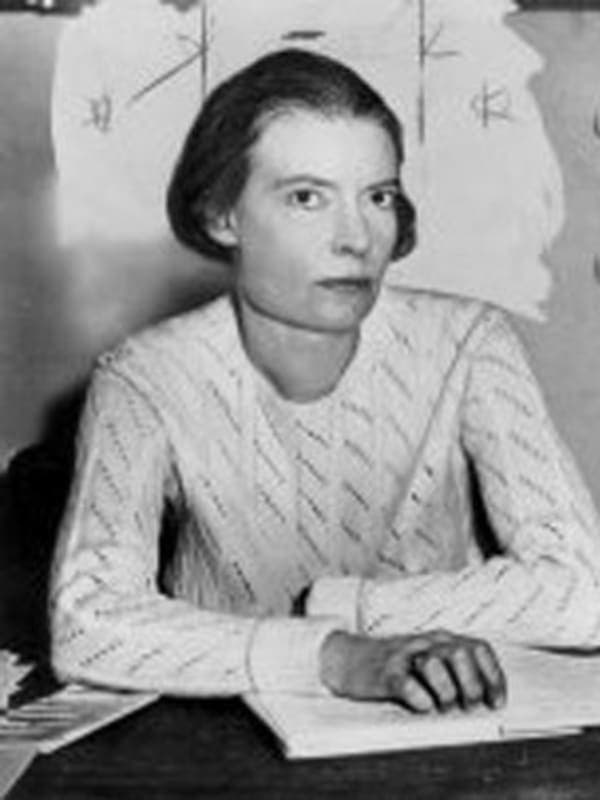
On the night of November 14, 1917, guards at the Occoquan Workhouse in Virginia dragged Dorothy Day — twenty years old, on the staff of the socialist journal The Masses until the government shut it down three months earlier — through the men's wing and slammed her over the arm of an iron bench1. She had been arrested four days prior for picketing the White House with Alice Paul's Silent Sentinels, sentenced to thirty days. She served fifteen, ten of them on hunger strike.2 When the women were released under public pressure, she wrote nothing triumphant. What she carried out of Occoquan was something harder to name: a sense of solidarity with prisoners and the poor that would not leave her for sixty more years.
Early Life
Growing up in Chicago in the years after the 1906 San Francisco earthquake had uprooted her family, Day discovered Upton Sinclair's The Jungle as a girl and began taking long walks through the South Side's slums and stockyards. She left the University of Illinois after two years on a scholarship, moved to New York's Lower East Side at eighteen, and wrote for socialist newspapers — The Call, The Masses, The Liberator. She spent time in Greenwich Village among playwrights and communists: Eugene O'Neill read Francis Thompson aloud to her in the early morning hours in a bar on Macdougal Street; Mike Gold was a lover. Around 1919, in a relationship with reporter Lionel Moise who told her he would leave if she kept the baby, she had an abortion. She said it was 'the great tragedy of her life.'3 She tried to commit suicide twice afterward.3 For years she believed the procedure had left her unable to conceive.
Career
In March 1926, living with biologist and anarchist Forster Batterham in a beach cottage on Staten Island — bought with $2,500 from the movie rights to a semi-autobiographical novel — Day gave birth to a daughter she named Tamar Teresa, in honor of St. Teresa of Ávila.4 She had thought herself sterile. The pregnancy broke something open. She had been praying while walking the beaches of Raritan Bay, sometimes without quite knowing why. Now she was determined to have Tamar baptized, though Batterham, a committed atheist, refused to countenance it. She converted to Catholicism in 1927, ending the common-law marriage2 and severing the life she had built on Staten Island. The cost of her conversion was not abstract.
In December 1932, working as a journalist, Day covered the communist-organized Hunger March in Washington, D.C. She watched thousands of unemployed workers fill the streets and felt, she wrote later, only the absence of the Church. She went to the National Shrine of the Immaculate Conception and prayed, in tears, that some way would open for her to use her talents for the poor.5 When she returned to New York she found Peter Maurin — a French immigrant, autodidact, former De La Salle brother, twenty years her senior — waiting at her door with a vision he called 'a new society within the shell of the old.' On May 1, 1933, Day and three others took the first issue of The Catholic Worker to Union Square, where communists were celebrating May Day, and sold it for one cent.6 Within three years, circulation reached 150,000 and houses of hospitality modeled on St. Joseph's House in New York had opened across the country.7
The pacifist position Day declared after the United States entered World War II cost the movement almost everything it had built. Circulation fell from 150,000 to 30,000.2 More than half the Catholic Worker houses closed as staff left to join the war effort. Day held. She ran the paper, kept the houses in New York open, and spent the next four decades being arrested — for refusing civil defense drills in the 1950s, for protesting nuclear arms, and in 1973, at seventy-five, for defying an injunction while picketing with César Chávez's United Farm Workers in the fields of California, where she spent ten days in jail.2 She wrote in her diary three months before she died: 'I went to jail in Washington, D.C. for woman's suffrage in the fall of 1917, but I have never voted.'8
Legacy
Dorothy Day died of heart failure on November 29, 1980, at Maryhouse, a Catholic Worker house on the Lower East Side of Manhattan.7 By 2020, there were 150 Catholic Worker houses and farms across the United States and another 29 in other countries; The Catholic Worker, still priced at one cent, had a circulation of 25,000.4 The Vatican opened her cause for canonization in March 20007, and in 2015 Pope Francis named her before a joint session of Congress alongside Abraham Lincoln, Martin Luther King Jr., and Thomas Merton.2 The debate around that cause surfaces a documented tension she herself kept carefully contained: the abortion she had in 1919, which she described privately but never addressed in print, became a contested object after her death, deployed in arguments about what she stood for. Some Catholic Worker members who knew her opposed the process, fearing her legacy would be flattened into a single issue she had spent forty years refusing to reduce to policy. She is buried in the Cemetery of the Resurrection on Staten Island. The headstone reads: 'Deo Gratias.'4